
Send Us A Message
When insecticides lose effectiveness because of poor spray coverage
A spray operation can look successful from the cab: the tank was mixed correctly, the applicator traveled at the planned speed, and the expected insecticide rate was used. Yet several days later, pests remain active in protected parts of the crop canopy, along leaf undersides, or on newly formed growth. In this situation, poor spray coverage is often more important than the product rate itself.
Insecticides cannot control insects that receive little or no deposit. A suitable active ingredient may still underperform when droplets do not reach the feeding site, when coverage is concentrated only on exposed upper surfaces, or when weather and equipment settings allow too much spray to drift or evaporate. Before assuming resistance or changing products, operators should first determine whether the target pest and its habitat were actually covered.
Coverage is not the same as spraying more liquid
Coverage means that an adequate amount of spray deposit reaches the surfaces where the target insect is present. Depending on the pest, this may include leaf undersides, stems, growing points, fruit clusters, bark crevices, soil-facing foliage, or dense interior canopy zones. A uniform-looking spray pattern from outside the crop does not prove that these locations received sufficient deposit.
More water volume can improve penetration in some situations, but it is not a universal fix. Excessive carrier volume may create runoff, while insufficient pressure or unsuitable nozzles can still leave sheltered surfaces untreated. The goal is not simply to wet the crop until it drips. The goal is to place droplets at the target with a droplet size, volume, angle, and energy appropriate for the crop structure and insect behavior.
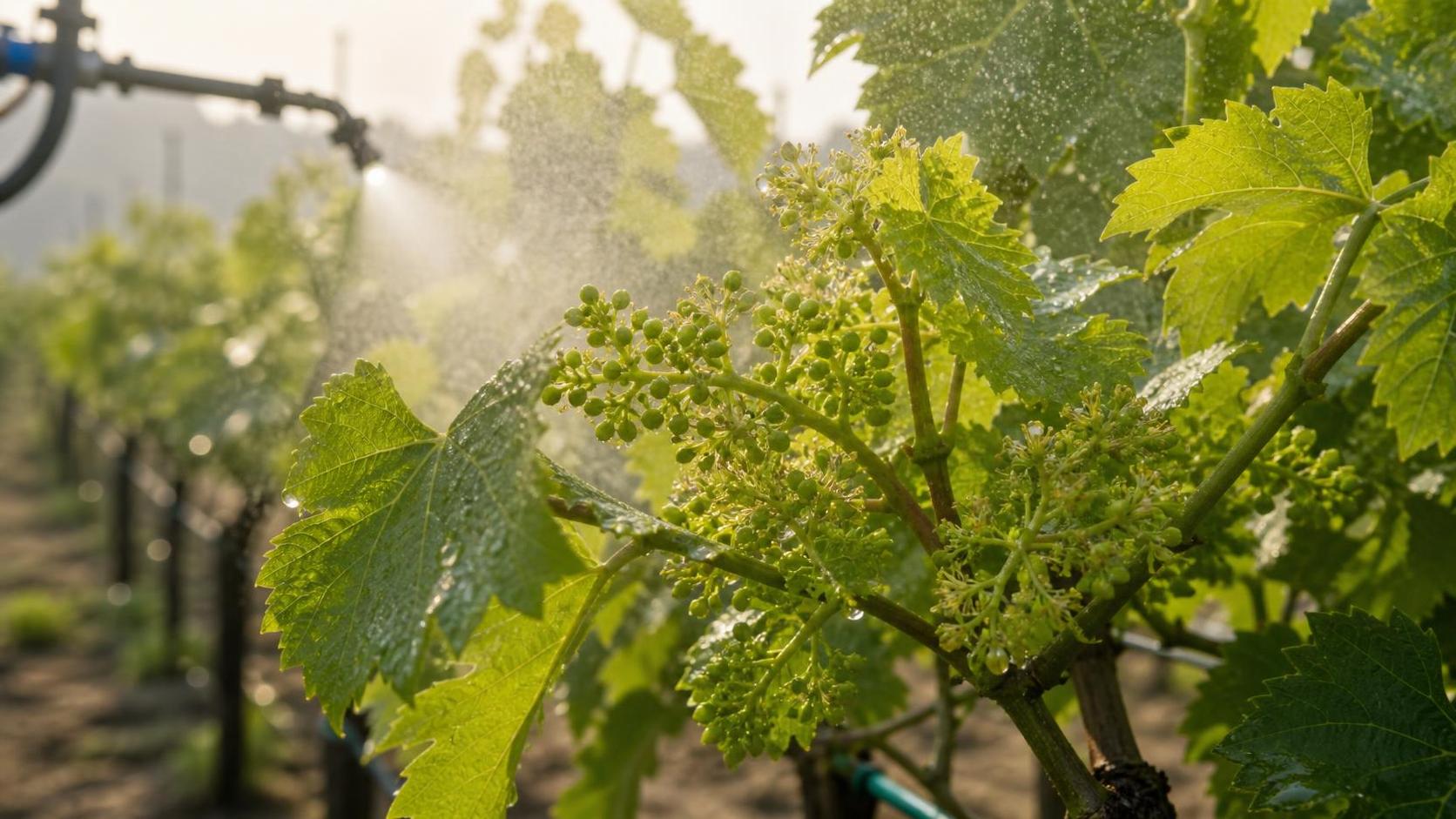
Coverage failures are especially likely when pests live on the underside of leaves, hide inside curled foliage, feed low in the canopy, or move into newly expanding plant tissue after treatment. Contact insecticides generally depend heavily on direct deposit. Products with translaminar or systemic activity may provide more flexibility, but they still require correct placement and enough uptake to perform as intended.
First, separate a coverage problem from other causes of control failure
Do not diagnose poor performance from a single untreated plant. Walk the treated area and look for a pattern. Coverage-related failure often appears uneven: exposed outer foliage may show reduced pest activity while shaded interiors remain infested; one side of a row may be better treated than the other; or pests may survive mainly below the height of the spray boom or within the densest crop zone.
The following observations point toward a deposition issue rather than an immediate product failure:
- Live insects are concentrated on lower leaves, leaf undersides, curled leaves, or interior foliage.
- Control differs across the width of the boom, between left and right sides of an air-assisted sprayer, or near row ends.
- Visible deposits occur on upper leaf surfaces but are scarce on protected surfaces.
- Pest survival is greatest where canopy density, weed pressure, or crop height reduced spray penetration.
- Spray was applied during windy, very hot, or low-humidity conditions that could increase drift or evaporation.
- The insecticide performed acceptably in a more open part of the field but poorly in dense areas treated on the same day.
These signals do not rule out resistance, application timing errors, incorrect identification, or poor spray-water quality. They do, however, show that reapplying the same treatment at a higher rate may not address the real cause. A second poorly covered application increases cost, crop exposure, and selection pressure without reliably improving control.
Start with the target, not the sprayer setting
Spray setup should be based on where the insect is located when treatment is made. Aphids, whiteflies, mites, thrips, caterpillars, and other pests do not all occupy the same plant surfaces. Even the same pest may change location as the crop grows or weather changes. An application aimed at top foliage will not adequately control an insect colony established under older leaves near the lower canopy.
Before filling the tank, inspect several representative plants. Look beyond the most visible damage. Turn leaves over, open dense foliage, inspect stems, and identify the height and side of the plant where the pest is most active. Record whether the target is mainly exposed, partly sheltered, or deeply protected. This inspection should guide nozzle choice, boom height, travel speed, carrier volume, and the need for air assistance or directional spraying.
Timing also affects exposure. Early infestations are usually easier to cover because plant canopies are more open and pest populations are smaller. Once insects are distributed through dense foliage or protected plant structures, reaching them becomes more difficult. Waiting until damage is obvious may turn a manageable coverage task into a penetration problem.
Nozzle selection determines where droplets go
Nozzles influence droplet spectrum, spray angle, distribution pattern, and the likelihood of drift. They should not be chosen only because they were used successfully on another crop or application. A nozzle that limits drift effectively may produce droplets too coarse for reliable coverage of small, sheltered targets unless the application setup compensates with suitable volume, pressure, travel speed, and spray direction.
Fine, medium, and coarse droplets
Smaller droplets can increase the number of impacts on a surface and improve coverage, particularly on small leaves or compact targets. Their disadvantage is greater drift potential and faster evaporation under unfavorable conditions. Very fine droplets may never reach the intended foliage when wind, high temperature, or low relative humidity is present.
Larger droplets are less prone to drift and can be useful where off-target movement is a concern. However, very coarse droplets may bounce, run off, or leave gaps between deposits, especially on waxy foliage and dense canopies. They may be unsuitable where a contact insecticide requires extensive surface coverage. The correct choice is often a balanced droplet spectrum rather than the finest or coarsest option available.
Check the nozzle pattern, not just the nozzle code
Worn, damaged, partially blocked, or mismatched nozzles create irregular output. A single poor nozzle can leave a narrow untreated strip; multiple worn nozzles can raise total output while distorting distribution. Inspect nozzle tips, strainers, caps, and seals. Clean them using approved methods and never clear an obstruction with wire or other tools that can alter the orifice.
For broadcast booms, verify that all nozzles are the same type and intended spacing. Confirm the recommended overlap at the actual boom height. For orchard, vineyard, greenhouse, or vertical-crop equipment, check that nozzles are positioned to match the active canopy, rather than continuing to spray above or below it.
Pressure, boom height, and speed work as one system
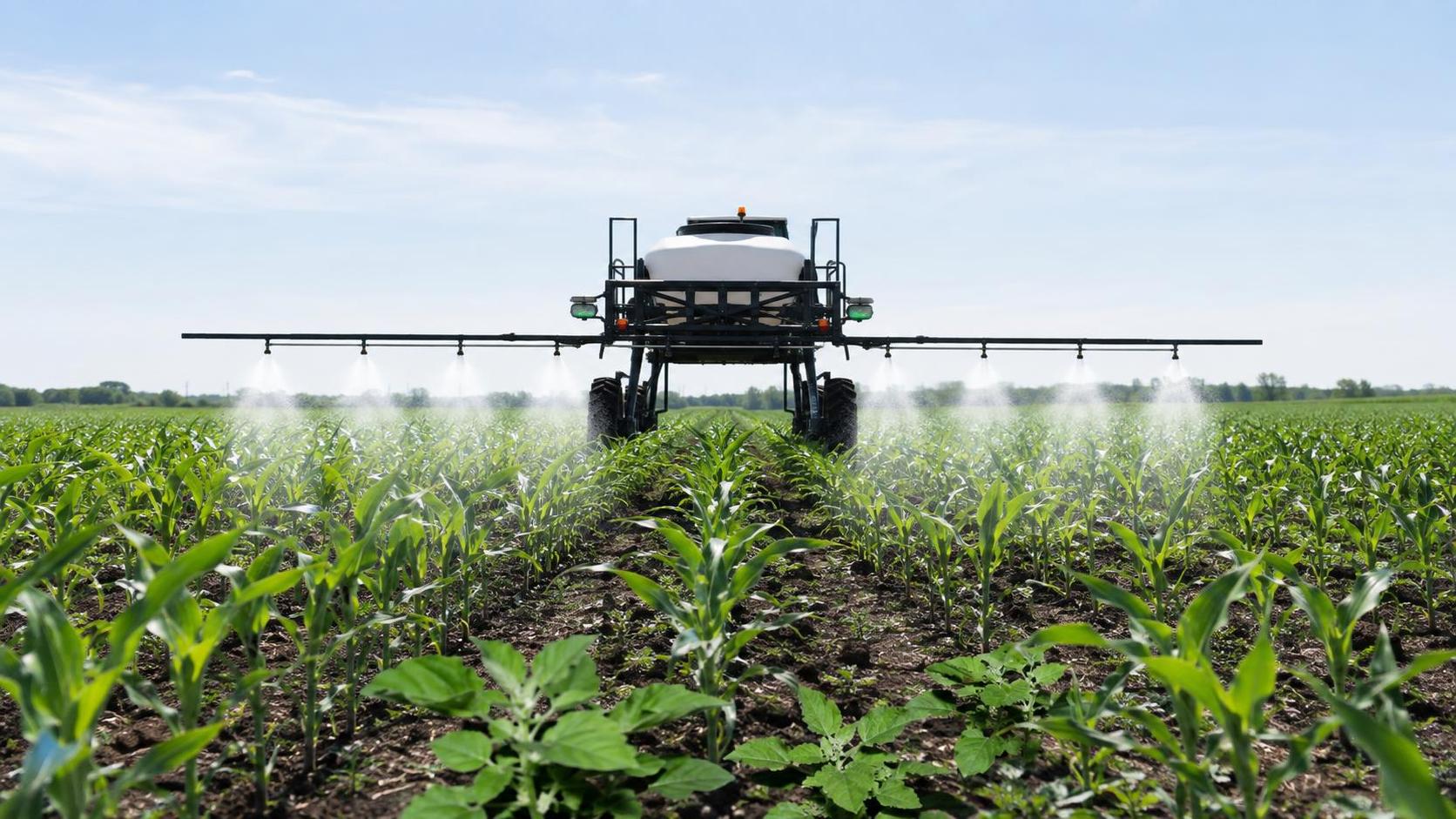
Operators often change one setting to solve a coverage problem without considering what happens to the rest of the application. Increasing pressure may reduce droplet size, but it can also increase drift and alter nozzle output. Raising the boom may improve overlap on paper while increasing the distance droplets travel through moving air. Increasing travel speed can reduce application time, yet it may lower deposition and worsen bounce or canopy bypass.
Maintain boom height only as high as needed for the nozzle pattern to overlap correctly. A stable boom is important because bouncing causes repeated changes in height and deposit distribution. In uneven ground, a boom that oscillates can create alternating over- and under-treated zones even when the machine is properly calibrated on level ground.
Travel speed should remain within the operating range used for calibration. Speeding up in order to finish before weather changes may reduce the intended application volume and make canopy penetration less effective. Slowing down without adjusting the system may increase runoff. Recalibration is required whenever meaningful changes are made to speed, nozzles, pressure, or target application volume.
Dense canopies need a different approach
A closed canopy creates physical barriers. Outer leaves intercept much of the spray, leaving interior foliage with little deposit. This is not always visible from the row edge because the outside of the plant may appear thoroughly wet. The problem becomes more severe as crop height, leaf area, and foliage density increase.
Where equipment and label directions allow, improve access by directing spray toward the zone where pests are found. In row crops, nozzle orientation may need adjustment to reach lower or lateral leaf surfaces. In tree and vine crops, air volume, outlet direction, and travel speed should be set so the spray moves through the canopy rather than stopping at the outer leaves. Excessive air energy can also push droplets past the target, so airflow should be evaluated rather than simply maximized.
Vegetation outside the crop can matter as well. Heavy weeds may intercept spray or harbor insects that later move back into treated plants. Manage weeds according to the production system and ensure that spray output is not being blocked by unnecessary foliage near the target zone.
Weather can undo a well-calibrated application
Even a sound equipment setup can fail under unsuitable conditions. Wind can move droplets away from the intended crop, especially smaller droplets. Gusts are more problematic than a steady light breeze because they change spray movement unpredictably. High temperatures and low humidity can shrink droplets before they reach foliage, reducing deposit size and increasing drift risk.
Temperature inversions require particular caution because fine droplets may remain suspended and move off target. Rainfall or irrigation soon after application can also reduce residues before the insecticide has had adequate time to dry, adhere, or be absorbed. Always follow the product label for weather restrictions, rainfast intervals, application method, buffer requirements, and permitted crop uses.
When conditions are marginal, delaying the application may be more effective than making a hurried pass. This is particularly true for contact insecticides, where lost droplets directly translate into untreated insects.
Use a simple deposition check before treating the whole area
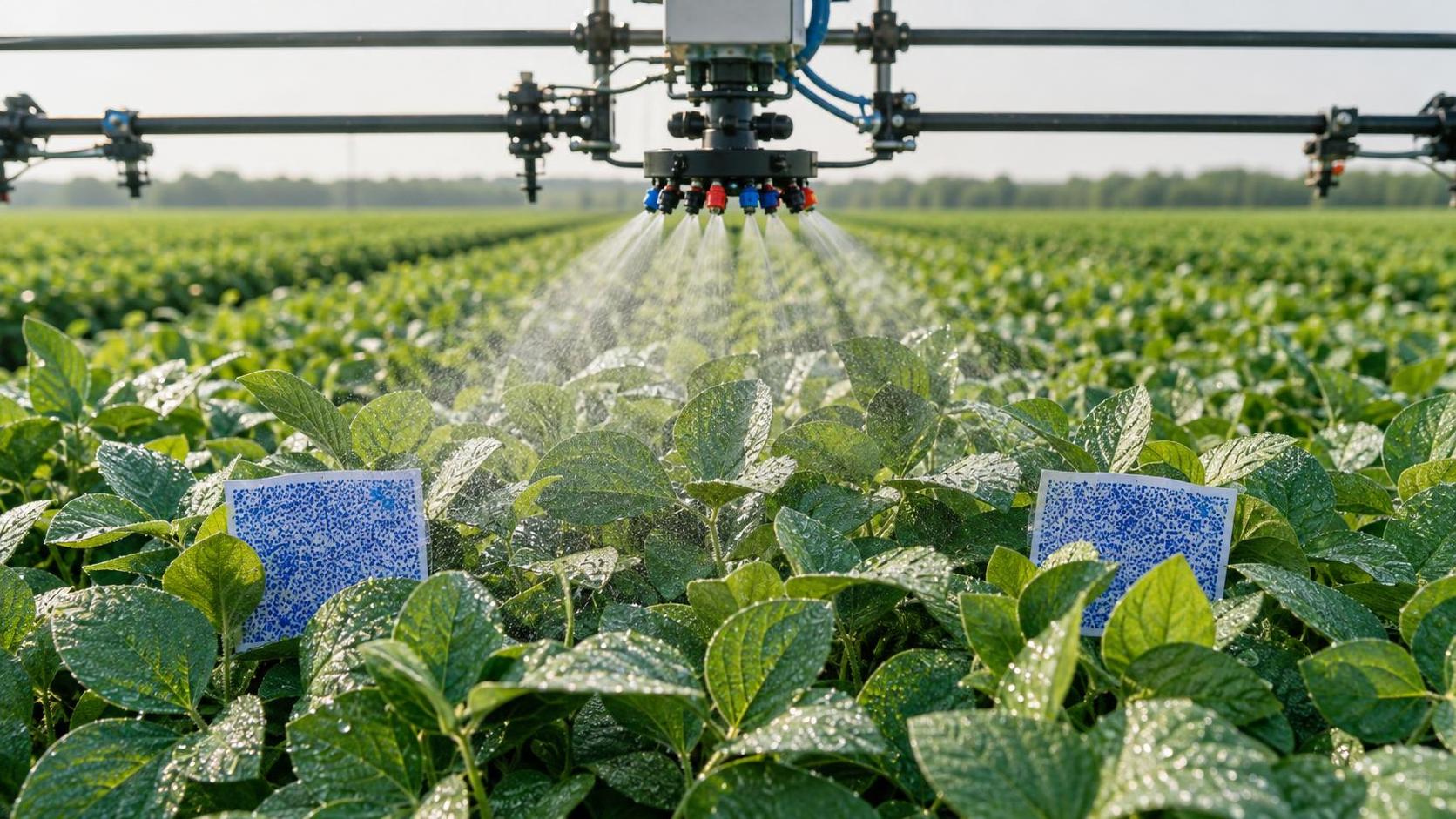
Water-sensitive paper or another appropriate deposition-monitoring method can reveal problems that the operator cannot see during spraying. Place cards at several heights and positions: exposed outer foliage, lower leaves, interior canopy, and the surfaces where the pest is actually found. Run a short test under planned operating conditions, then inspect the pattern.
The aim is not necessarily to create identical spots on every card. Protected sites may naturally receive fewer droplets than exposed ones. The important question is whether deposits reach the target zone consistently enough for the insecticide mode of action. Cards showing almost no impact in pest habitat indicate that product selection alone will not solve the problem.
Check for excessive runoff at the same time. Heavy droplets merging into wet films can indicate overapplication on outside foliage while inner surfaces remain poorly covered. In that case, increasing total volume may waste material without improving the protected zone. Adjust direction, airflow, droplet spectrum, or speed before increasing the rate.
Mixing and water quality can affect the deposit after it lands
Coverage is mainly a physical placement issue, but the spray mixture still matters. Poor agitation, incompatible tank mixes, incorrect mixing order, or blocked strainers can create uneven concentration across the application. A deposit that reaches the leaf may also perform poorly if the formulation does not spread, retain, or remain available as intended.
Use clean water, follow the label sequence for adding products, and keep agitation adequate throughout the operation. Do not add adjuvants simply to make foliage look wetter. Some adjuvants can improve spreading or retention in specific situations, while others can increase runoff, crop injury risk, or incompatibility. Their use must be permitted by the insecticide label and appropriate for the crop and application method.
When a repeat treatment is being considered
Inspect surviving pests before deciding on another application. Determine whether they are located in missed areas, whether eggs or protected life stages were unaffected, and whether new growth appeared after the first treatment. Check the label for retreatment intervals, maximum use limits, and resistance-management guidance.
If poor coverage was confirmed, correct the application method before repeating treatment. If coverage was adequate but pests remain uniformly active across treated surfaces, investigate other explanations such as pest misidentification, unsuitable timing, resistant populations, incorrect product selection, or inadequate dose caused by mixing or calibration errors. Rotating to a different mode of action may be necessary in some programs, but rotation does not compensate for droplets that never reached the pest.
The most useful operating habit is to treat spray coverage as a measurable part of insect control, not an assumption. Inspect pest location, calibrate the equipment for that location, test deposition when conditions or canopy structure change, and evaluate the treated crop before deciding that the insecticide itself has lost effectiveness.
Send Us Your Inquiry Today
To view the current overseas warehouse inventory list or obtain a tailored logistics solution, please contact us via the form on our official website or by email.